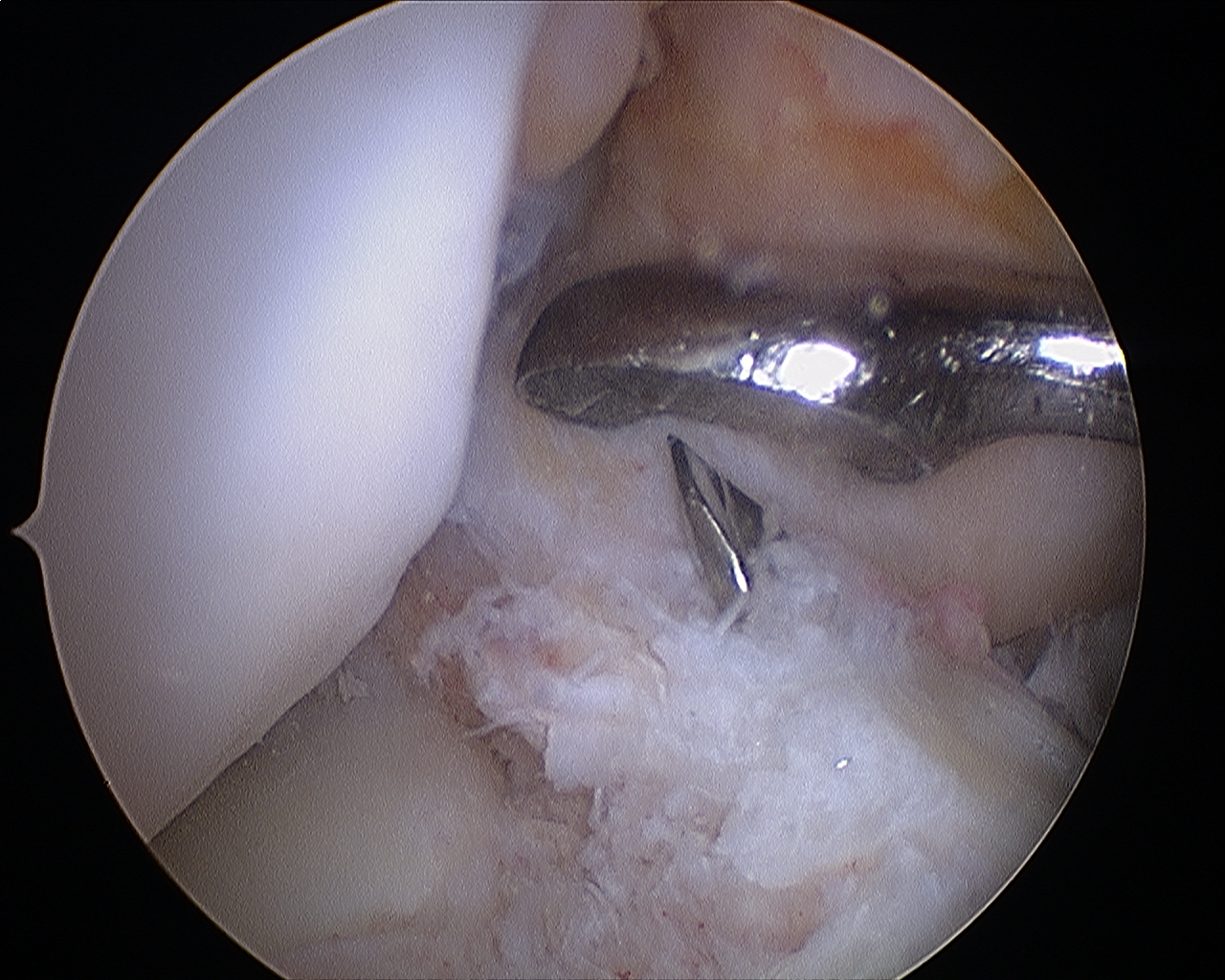
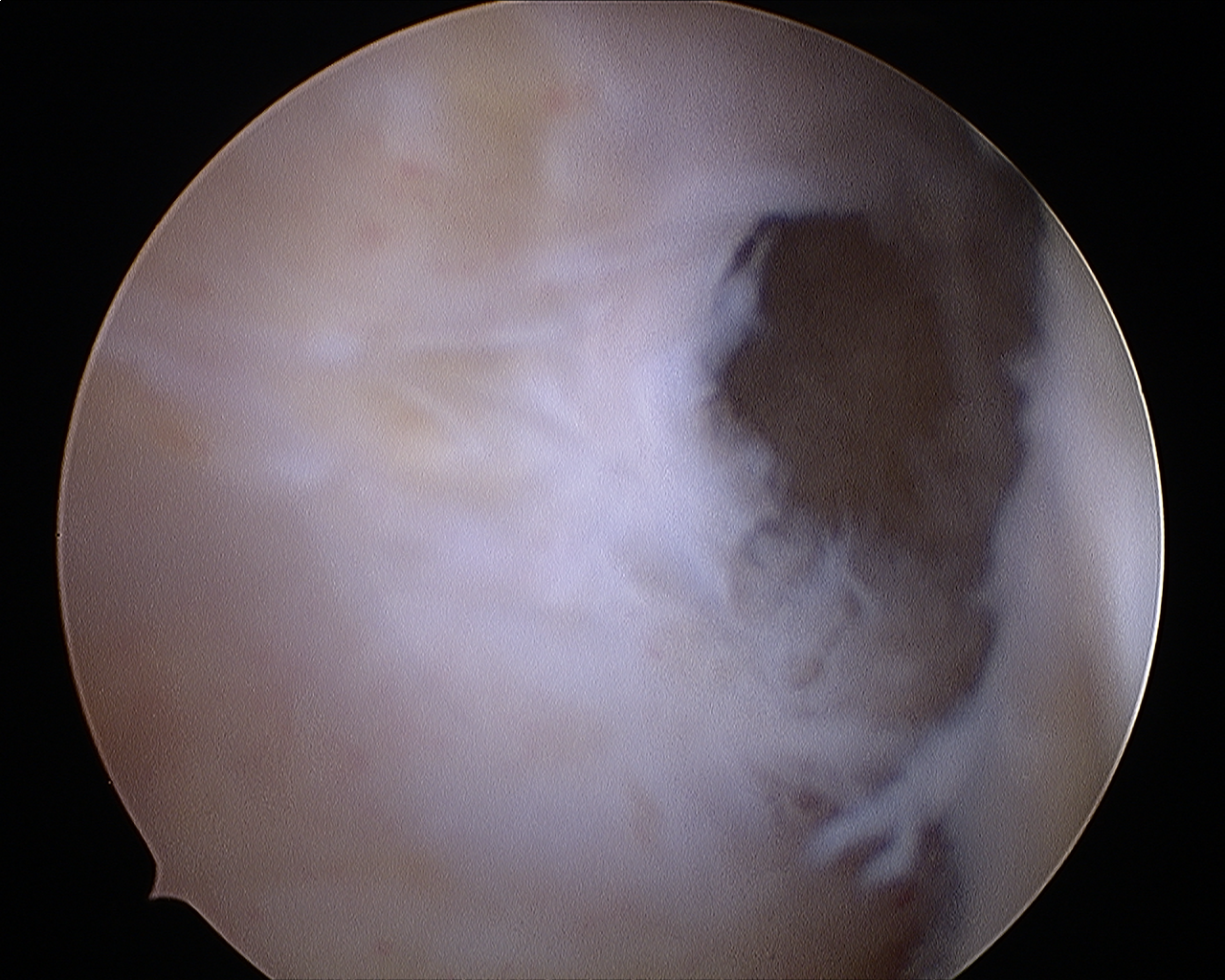
High Tibial Osteotomy (HTO) is an orthopaedic surgical procedure used to correct knee alignment and redistribute body weight across the knee joint. It is most commonly performed in patients with medial compartment osteoarthritis of the knee associated with varus (bow-leg) deformity.
The procedure involves cutting and reshaping the upper part of the tibia (shin bone) to shift the load from the damaged medial compartment to the healthier lateral compartment of the knee.
Indications
HTO is typically recommended for:
Medial compartment osteoarthritis
Varus knee deformity (bow-legged alignment)
Young or active patients (<60 years)
Early to moderate knee arthritis
Patients wishing to delay knee replacement
Principle
In varus alignment, excessive load passes through the medial compartment of the knee.
HTO realigns the mechanical axis of the lower limb so that weight shifts laterally, reducing pressure on the diseased area.
Types of High Tibial Osteotomy
Medial Opening Wedge Osteotomy
Bone cut made on the medial side of tibia
Wedge is opened and fixed with a plate
Most commonly performed technique today.
Lateral Closing Wedge Osteotomy
Bone wedge is removed from lateral tibia
Bone ends are closed and fixed.
Basic Surgical Steps
Incision over the proximal tibia.
Controlled bone cut (osteotomy) is made.
Bone wedge opened or closed to correct alignment.
Fixation with plate and screws.
Sometimes bone graft is used in opening wedge osteotomy.
HTO is particularly beneficial for younger, active patients with isolated medial compartment disease, helping maintain their native knee joint for many years before considering total knee replacement.
Hello 👋, welcome from Dr. Hiren Patel – Best Orthopedic Doctor in Ahmedabad

 Make Appointment